Tag: collections removal

  • Can Credit Repair Companies Really Fix Your Credit

    Can Credit Repair Companies Really Fix Your Credit

    Last updated: February 27, 2026

    Thousands of Americans struggling with poor credit scores wonder if hiring a professional service can turn their financial situation around. Can credit repair companies really fix your credit? Yes, but only if your credit report contains inaccurate, outdated, or unverifiable information that can be legally disputed and removed. These companies cannot erase legitimate negative marks, no matter what their marketing promises suggest.

    The credit repair industry has grown to a $5.98 billion market in 2026, with over 25,000 businesses competing for customers[3][4]. This explosive growth doesn’t necessarily mean these services work miracles—it reflects increased consumer demand and aggressive marketing rather than guaranteed results. Understanding what credit repair companies can and cannot do will help you decide whether paying for professional help makes sense for your situation.

    Key Takeaways

    • Credit repair companies can only dispute and potentially remove inaccurate or unverifiable information from your credit reports, not legitimate negative marks
    • The average consumer saw just a 14-point FICO score increase from 2018 to 2023, despite the industry’s revenue growth[6]
    • Monthly fees typically range from $79 to $139.99, with setup fees between $19 and $195[1]
    • You can legally perform all credit repair actions yourself for free under the Fair Credit Reporting Act (FCRA)
    • Disputing genuine errors is one of the most effective credit repair strategies and can lead to fast score improvements[8]
    • The process takes time—expect 30 to 45 days per dispute round, with no guarantees of success
    • Reputable companies offer 90-day money-back guarantees and transparent pricing[1]

    Quick Answer
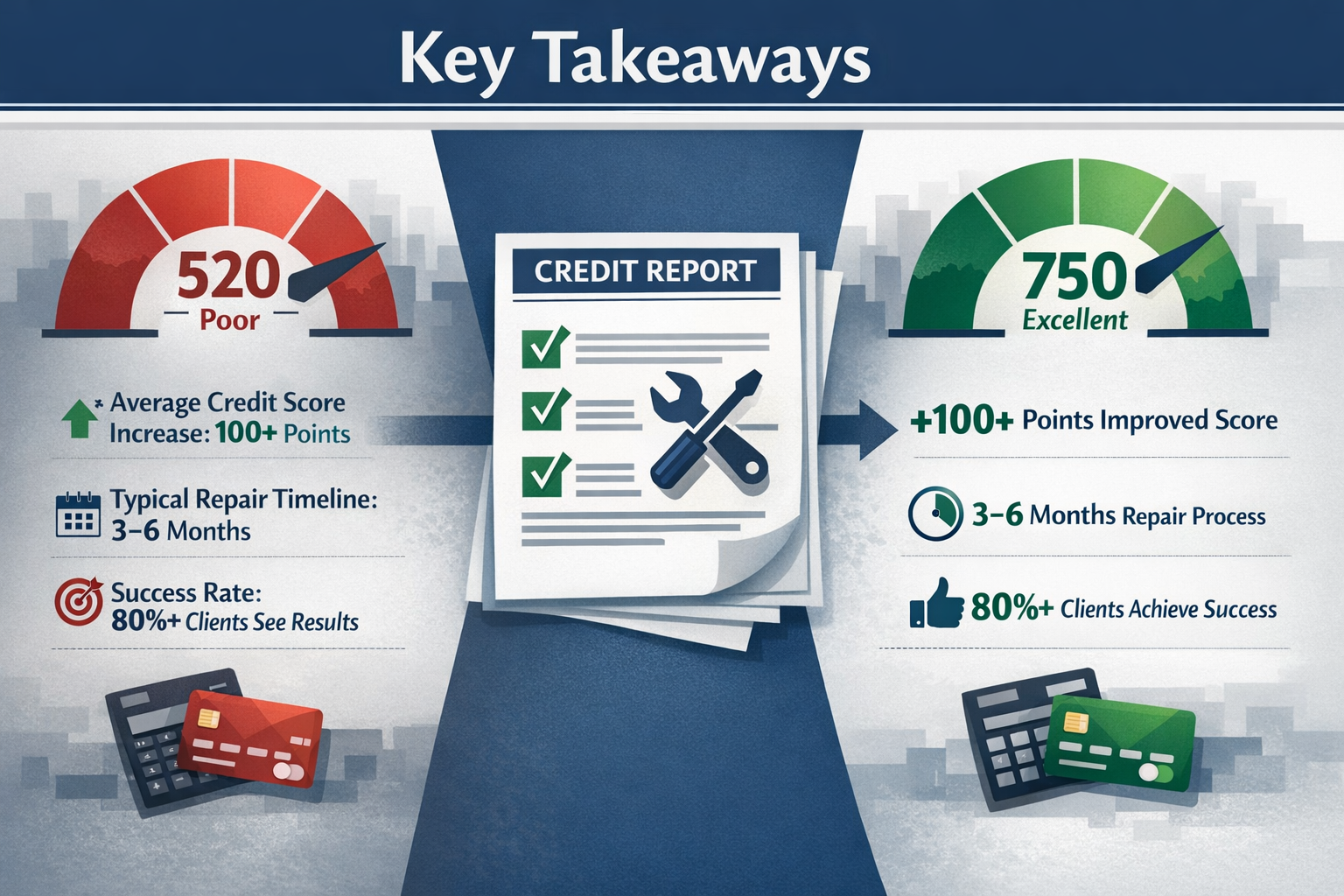
    Key Takeaways section infographic visualizing credit repair process, split-screen design with left side showing damaged credit score (red, l

    Credit repair companies can fix your credit if it contains errors, but they can’t remove accurate negative information. They work by identifying inaccuracies on your credit reports and disputing them with the three major credit bureaus (Equifax, Experian, and TransUnion). If the bureaus can’t verify the disputed items within 30 days, those items must be removed. However, anything you pay a company to do, you can legally do yourself for free.

    What Do Credit Repair Companies Actually Do?

    Credit repair companies identify and dispute potentially inaccurate, outdated, or unverifiable negative items on your credit reports. They act as intermediaries between you and the credit bureaus, handling the paperwork and follow-up required for formal disputes.

    Here’s what the process typically involves:

    Initial Credit Analysis

    • Pull reports from all three major bureaus
    • Review for errors, duplicates, or outdated information
    • Identify items that might be disputed successfully
    • Create a customized action plan

    Dispute Filing and Management

    • Draft formal dispute letters to credit bureaus
    • Submit disputes for questionable items
    • Track responses and investigation timelines
    • File additional rounds of disputes if needed

    Creditor Communication

    • Contact original creditors for verification
    • Request debt validation when appropriate
    • Negotiate with collection agencies in some cases

    Ongoing Monitoring

    • Track changes to your credit reports
    • Alert you to new negative items
    • Provide monthly progress updates

    Modern credit repair services increasingly use AI-powered tools for credit score analysis and dispute automation[3]. This technology helps identify patterns and potential errors more efficiently than manual review, though it doesn’t change the fundamental legal limitations of what can be removed.

    What they cannot legally do:

    • Remove accurate negative information
    • Create a new credit identity for you
    • Guarantee specific score increases
    • Charge upfront fees before performing services (illegal under federal law)

    Can Credit Repair Companies Really Fix Your Credit If Errors Exist?

    Yes, credit repair companies can effectively fix your credit when legitimate errors exist on your reports. Disputing inaccuracies is identified as one of the most effective credit repair moves, with corrections potentially leading to fast score improvements[8].

    The Fair Credit Reporting Act (FCRA) requires credit bureaus to investigate disputes within 30 days and remove any information they cannot verify. This creates the legal framework that makes credit repair possible.

    Common errors worth disputing:

    • Accounts that don’t belong to you (identity theft or mixed files)
    • Duplicate accounts listed multiple times
    • Incorrect payment statuses or late payment dates
    • Accounts reporting past the legal reporting period (typically 7 years for most negatives, 10 years for Chapter 7 bankruptcy)
    • Incorrect balances or credit limits
    • Closed accounts still showing as open
    • Settled debts still showing balances owed

    Success rates vary based on:

    • Whether the error is genuinely inaccurate versus just negative
    • How well the original creditor maintains records
    • The age of the account (older accounts are harder to verify)
    • The type of negative item being disputed

    A common mistake consumers make is expecting companies to remove accurate negative information. If you legitimately missed payments or defaulted on a loan, those marks will typically remain for seven years regardless of how many times you dispute them. The bureaus will verify the information with the creditor and the negative item will stay on your report.

    Choose a credit repair company if:

    • You’ve identified errors but feel overwhelmed by the dispute process
    • You have multiple complex errors across all three bureaus
    • You lack time to manage disputes yourself
    • You want professional guidance on prioritizing which items to dispute first

    How Much Do Credit Repair Services Cost in 2026?

    Credit repair companies charge monthly fees ranging from $79 to $139.99, with initial setup fees between $19 and $195[1]. Most reputable services offer 90-day money-back guarantees if they don’t remove at least one item from your reports.

    Typical pricing structure:

    Company Setup Fee Monthly Fee Money-Back Guarantee
    The Credit People $19 $79 90 days
    Sky Blue Credit $79 $79 90 days
    CreditRepair.com $99.95 $99.95 90 days
    Credit Saint $195 $79.99-$139.99 90 days

    Most companies operate on a month-to-month basis, meaning you can cancel anytime. However, credit repair is a time-intensive process with no immediate results possible[2][7]. Expect to pay for at least 3-6 months of service to see meaningful results, putting total costs between $237 and $839 or more.

    Hidden costs to consider:

    • Some companies charge per item disputed rather than flat monthly fees
    • Premium tiers offer additional services like identity theft insurance
    • You may need to purchase credit monitoring separately
    • Opportunity cost of monthly fees versus using that money to pay down debt

    Red flags for pricing scams:

    • Upfront fees before any work is performed (illegal under federal law)
    • Guarantees of specific score increases
    • Pressure to sign long-term contracts
    • Vague pricing without clear breakdowns

    For comparison, doing it yourself costs nothing except your time. The FCRA gives you the same legal rights to dispute errors that credit repair companies use.

    What Can’t Credit Repair Companies Remove From Your Credit?

    Credit repair companies cannot legally remove accurate negative information from your credit report, regardless of their marketing claims. This fundamental limitation means they can’t help everyone who hires them.

    Items that will stay if accurate:

    • Late payments you actually made
    • Charge-offs from legitimate unpaid debts
    • Collections for debts you owe
    • Bankruptcies filed within the past 7-10 years
    • Foreclosures within the past 7 years
    • Repossessions for vehicles you defaulted on
    • Tax liens (though these no longer appear on most credit reports as of 2018)
    • Hard inquiries from credit applications you authorized

    The only way accurate negative information disappears is through the passage of time. Most negative marks fall off after seven years, though Chapter 7 bankruptcies remain for 10 years.

    Some companies use aggressive tactics to try removing accurate information, such as:

    • Filing frivolous disputes hoping creditors won’t respond in time
    • Exploiting technicalities in how information is reported
    • Overwhelming bureaus with repetitive disputes

    These approaches rarely work long-term. Even if an item is temporarily removed, creditors can re-report accurate information, putting it back on your report.

    Edge case: Sometimes accurate negative information is reported incorrectly (wrong date, wrong amount, wrong status). In these cases, you can dispute the inaccuracy even though the underlying debt is real. For example, if a late payment from March 2024 is incorrectly listed as being from March 2023, that’s a legitimate dispute.

    For specific guidance on removing certain types of negative marks, see our detailed guides on whether credit repair companies can remove collections and if they can remove charge-offs.

    DIY Credit Repair vs. Hiring a Professional Service

    You can legally perform all credit repair actions yourself for free. The same FCRA rights that credit repair companies use are available to every consumer. The question becomes whether the convenience and expertise justify the monthly cost.

    DIY credit repair advantages:

    • Zero cost except your time
    • Complete control over the process
    • Direct communication with bureaus and creditors
    • No risk of scams or disreputable companies
    • Builds your understanding of credit systems

    DIY credit repair disadvantages:

    • Time-intensive (several hours per month)
    • Requires learning dispute procedures
    • Easy to make mistakes that weaken disputes
    • No professional guidance on strategy
    • Can feel overwhelming with multiple errors

    Professional service advantages:

    • Saves you time and effort
    • Experience with effective dispute strategies
    • Handles all correspondence and follow-up
    • May identify errors you missed
    • Some offer additional services (credit monitoring, identity theft protection)

    Professional service disadvantages:

    • Monthly costs of $79-$139.99 or more[1]
    • Cannot do anything you can’t do yourself
    • Industry includes many disreputable companies
    • No guaranteed results
    • Some use aggressive tactics that may backfire

    Choose DIY if:

    • You have only a few errors to dispute
    • You’re comfortable writing formal letters
    • You have time to manage the process
    • You want to save money
    • You prefer direct control

    Choose professional services if:

    • You have complex errors across multiple reports
    • You lack time for the dispute process
    • You feel overwhelmed by credit report complexity
    • You want expert guidance on prioritization
    • The monthly cost fits your budget

    A middle-ground option is using free or low-cost online tools that guide you through DIY disputes while providing templates and tracking. Many nonprofit credit counseling agencies also offer free credit report review and dispute assistance.

    How Long Does Credit Repair Actually Take?

    Credit repair is fundamentally time-consuming with no immediate results possible[2][7]. Each dispute round takes 30 to 45 days for credit bureaus to investigate, and most people need multiple rounds to address all errors.

    Realistic timeline expectations:

    Month 1-2: Initial Analysis and First Disputes

    • Pull and review all three credit reports
    • Identify errors and create dispute strategy
    • File first round of disputes
    • Wait for bureau investigations (30 days)

    Month 3-4: Review Results and Second Round

    • Receive investigation results
    • File follow-up disputes for items not removed
    • Dispute any new errors discovered
    • Wait for second investigation period

    Month 5-6: Final Disputes and Monitoring

    • Address remaining errors
    • Monitor for re-insertion of deleted items
    • Begin positive credit-building activities
    • Evaluate overall progress

    Most people see their first results within 60-90 days, but achieving maximum improvement often takes 6-12 months. The average consumer’s FICO score increased by only 14 points from 2018 to 2023[6], suggesting modest improvements are typical even with professional help.

    Factors affecting timeline:

    • Number of errors on your reports
    • How quickly creditors respond to verification requests
    • Whether items are re-inserted after initial removal
    • Complexity of your credit situation
    • How many dispute rounds are needed

    Common mistake: Expecting overnight results. Companies that promise “fast credit repair” or “guaranteed score increases in 30 days” are using misleading marketing. The legal dispute process has built-in timeframes that cannot be shortened.

    What speeds up the process:

    • Accurate identification of genuine errors
    • Well-documented disputes with supporting evidence
    • Focusing on high-impact errors first
    • Simultaneously building positive credit (on-time payments, low utilization)

    What slows it down:

    • Disputing accurate information (wastes time and rounds)
    • Poorly written disputes without specifics
    • Creditors who respond quickly with verification
    • Multiple errors requiring sequential dispute rounds

    Red Flags: How to Spot Credit Repair Scams
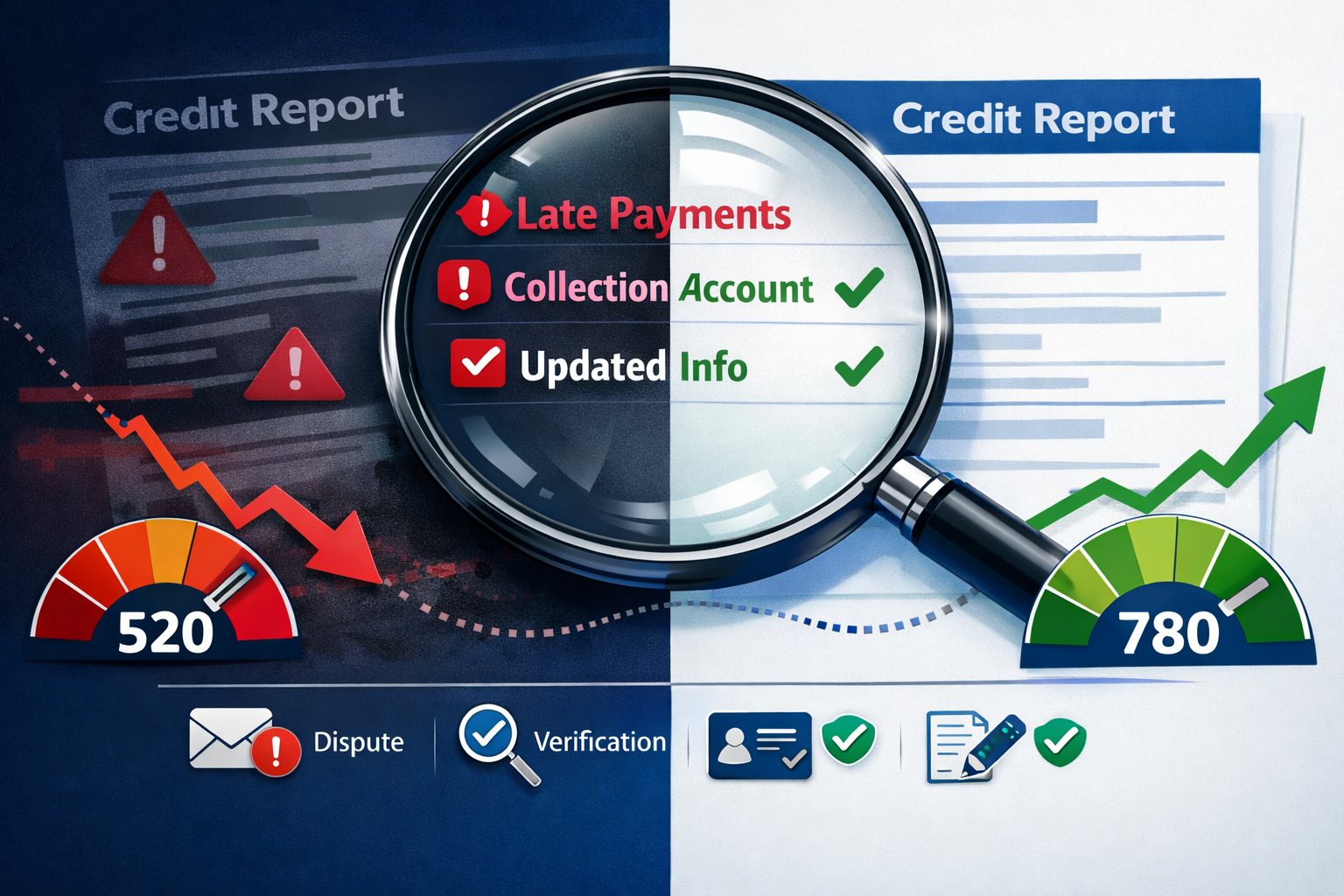
    Quick Answer section dynamic visual metaphor depicting credit repair journey, featuring oversized magnifying glass revealing hidden credit r

    Consumer skepticism and fraud concerns remain significant industry challenges[2]. Knowing the warning signs helps you avoid disreputable companies that take your money without delivering results.

    Major red flags:

    🚩 Upfront fees before performing any work – Illegal under the Credit Repair Organizations Act (CROA)

    🚩 Guarantees of specific score increases – No one can guarantee results since outcomes depend on what’s actually on your report

    🚩 Promises to remove accurate negative information – Legally impossible and a sign of fraudulent practices

    🚩 Advice to dispute everything – Wastes time and money; only errors should be disputed

    🚩 Suggestions to create a new credit identity – Illegal and constitutes fraud

    🚩 Pressure to sign immediately – Reputable companies let you review terms carefully

    🚩 No written contract – CROA requires detailed written agreements

    🚩 Refusal to explain your legal rights – Companies must inform you of rights under FCRA

    🚩 Telling you not to contact credit bureaus directly – You have the legal right to communicate directly

    🚩 No physical address or unclear company information – Makes it hard to pursue complaints

    Notable industry incident: Lexington Law, one of the largest credit repair companies, was involved in a class action lawsuit with complaints that the company was not effectively repairing credit[5]. This highlights that even well-known companies face scrutiny and consumer complaints.

    How to verify legitimacy:

    • Check Better Business Bureau ratings and complaint history
    • Read recent customer reviews on independent sites
    • Verify the company has been in business for several years
    • Confirm they offer a money-back guarantee
    • Ensure all terms are clearly explained in writing
    • Look for transparent pricing without hidden fees

    Regulatory framework: The FCRA heavily shapes industry operations, with stringent regulations limiting aggressive tactics and protecting consumer rights[2]. Regulatory scrutiny intensified in 2020, and new legislation was proposed in 2023 to further regulate the industry[2].

    Top Legitimate Credit Repair Companies in 2026

    Leading companies include Credit Saint, Sky Blue Credit, Lexington Law, CreditRepair.com, The Credit People, and others[1][2]. These established providers offer transparent pricing, money-back guarantees, and clear explanations of services.

    What makes a company reputable:

    • Years of established operation (5+ years)
    • Clear, transparent pricing structure
    • 90-day or longer money-back guarantee
    • Positive customer reviews from independent sources
    • No upfront fees before service begins
    • Detailed written contracts explaining services
    • Responsive customer service
    • Educational resources about credit

    Service features to look for:

    • Disputes filed with all three credit bureaus
    • Monthly progress reports and updates
    • Credit monitoring and score tracking
    • Mobile app for easy access
    • Educational resources and credit coaching
    • Intervention for identity theft issues
    • Goodwill letter assistance for creditors

    Pricing considerations: Services range from $19 setup fees with $79 monthly charges (The Credit People, Sky Blue Credit) to $195 setup fees with $139.99 monthly charges (Credit Saint’s premium tier)[1]. Higher prices don’t always mean better results—evaluate based on services included and customer reviews.

    Questions to ask before signing up:

    • What specific services are included in the monthly fee?
    • How long is the money-back guarantee period?
    • What happens if no items are removed?
    • Can I cancel anytime without penalties?
    • How will you communicate progress to me?
    • Do you dispute with all three bureaus?
    • What additional fees might I encounter?

    Technology integration has become central to operations, with leading companies utilizing AI-powered tools for credit score analysis and dispute automation[3]. This can improve efficiency but doesn’t change the fundamental legal limitations of what can be removed.

    Alternatives to Credit Repair Companies

    Several alternatives exist for people who want to improve their credit without paying monthly fees to a credit repair service.

    Free DIY dispute process:

    • Request free credit reports from AnnualCreditReport.com
    • Review for errors, duplicates, and outdated information
    • File disputes directly with credit bureaus online or by mail
    • Follow up on investigations and results
    • Repeat as needed for remaining errors

    The Consumer Financial Protection Bureau (CFPB) provides free sample dispute letters and step-by-step guidance.

    Nonprofit credit counseling:

    • Free or low-cost services from HUD-approved agencies
    • Credit report review and error identification
    • Dispute assistance and guidance
    • Debt management plans for those with unmanageable debt
    • Financial education and budgeting help

    Find legitimate counselors through the National Foundation for Credit Counseling (NFCC).

    Credit monitoring services:

    • Track changes to your credit reports automatically
    • Alert you to new errors or potential identity theft
    • Some offer dispute assistance tools
    • Often cheaper than full credit repair services
    • Many credit card companies offer free monitoring

    Positive credit building:

    • Make all payments on time (35% of FICO score)
    • Pay down credit card balances (30% of FICO score)
    • Become an authorized user on someone’s good account
    • Open a secured credit card to establish positive history
    • Keep old accounts open to maintain credit history length

    Debt settlement or management:

    • For those with legitimate debts they can’t pay
    • Negotiate directly with creditors for reduced balances
    • Work with nonprofit debt management programs
    • Consider whether bankruptcy might be appropriate for severe situations

    When to use each alternative:

    • DIY disputes: You have a few clear errors and time to manage the process
    • Credit counseling: You need guidance but can’t afford paid services
    • Credit monitoring: You want ongoing protection and alerts
    • Positive building: You have no errors but need to rebuild after legitimate negatives
    • Debt settlement: You have real debts you cannot pay in full

    For more information on specific strategies, explore resources on credit score improvement and consumer credit management.

    Frequently Asked Questions

    Can credit repair companies guarantee they’ll fix my credit? No legitimate company can guarantee specific results. Credit repair outcomes depend entirely on whether your reports contain inaccurate information that can be successfully disputed and removed. Companies that promise guaranteed score increases are using deceptive marketing.

    How much will my credit score increase with credit repair? It varies widely based on your individual situation. The average consumer saw just a 14-point FICO score increase from 2018 to 2023[6]. If you have multiple significant errors removed, you might see larger improvements. If your negative items are accurate, you’ll see little to no improvement.

    Is it worth paying for credit repair or should I do it myself? DIY credit repair costs nothing except time and gives you the same legal rights as paid services. Pay for professional help if you have complex errors across multiple reports, lack time for the process, or want expert guidance. Skip paid services if you have just a few errors and feel comfortable managing disputes yourself.

    How long do negative items stay on my credit report? Most negative items remain for seven years from the date of first delinquency. Chapter 7 bankruptcies stay for 10 years. Hard inquiries remain for two years but only affect scores for one year. Positive information can stay indefinitely.

    Can credit repair companies remove collections from my credit report? They can remove collections that are inaccurate, unverifiable, or past the legal reporting period. They cannot remove accurate collections within the seven-year reporting window. Learn more in our guide on removing collections.

    What’s the Credit Repair Organizations Act (CROA)? CROA is federal law that regulates credit repair companies. It prohibits upfront fees before services are performed, requires written contracts, mandates disclosure of consumer rights, and bans false advertising. It gives you the right to cancel within three days of signing.

    Do credit repair companies work with all three credit bureaus? Reputable companies dispute errors with all three major bureaus (Equifax, Experian, and TransUnion) because creditors don’t report to all three consistently. Your reports may differ across bureaus, so comprehensive service addresses all three.

    Can I repair my credit if I’ve filed for bankruptcy? Yes, but credit repair can’t remove an accurate bankruptcy filing. It can remove errors related to accounts included in bankruptcy (like debts still showing balances after discharge) or other unrelated inaccuracies. Building positive credit after bankruptcy is often more effective than disputing the bankruptcy itself.

    What happens if a disputed item is removed but then reappears? This is called “re-insertion.” If a creditor provides verification after initially failing to respond, the item can be put back on your report. The bureau must notify you within five days of re-insertion. You can dispute again with additional documentation or request the creditor’s verification evidence.

    Are there credit repair services specifically for business credit? Yes, some companies specialize in business credit repair, which involves different bureaus (Dun & Bradstreet, Experian Business, Equifax Business) and different reporting rules. Business credit repair follows similar principles but requires industry-specific expertise.

    How do I file a complaint against a credit repair company? File complaints with the Consumer Financial Protection Bureau (CFPB), your state attorney general’s office, and the Federal Trade Commission (FTC). You can also report to the Better Business Bureau and leave reviews warning other consumers.

    Will using a credit repair company hurt my credit score? No, the dispute process itself doesn’t hurt your score. However, if you stop making payments on legitimate debts while disputing them, those new late payments will damage your credit. Continue meeting all financial obligations during the credit repair process.

    Conclusion

    Can credit repair companies really fix your credit? The answer depends entirely on what’s wrong with it. If your credit reports contain errors, outdated information, or unverifiable negative items, credit repair companies can successfully dispute and remove them, potentially improving your score. However, they cannot legally remove accurate negative information, no matter how much you pay or what they promise.

    The credit repair industry generated $5.98 billion in revenue in 2026[3], but the average consumer saw only modest score improvements over recent years[6]. This gap between industry growth and actual results highlights an important truth: credit repair is not a magic solution, and many people would achieve the same results doing it themselves for free.

    Your next steps:

    1. Pull your credit reports from all three bureaus at AnnualCreditReport.com
    2. Review carefully for errors, duplicates, and outdated information
    3. Decide your approach based on the complexity of errors and your available time
    4. If hiring help, choose a reputable company with transparent pricing and money-back guarantees
    5. If going DIY, use free resources from the CFPB and nonprofit credit counselors
    6. Focus on positive building alongside error disputes for maximum improvement
    7. Set realistic expectations about timelines (3-6 months minimum) and potential score increases

    Remember that legitimate credit repair takes time, and there are no shortcuts to removing accurate negative information. The most effective long-term strategy combines disputing genuine errors with building positive credit through on-time payments, low credit utilization, and responsible financial management.

    Whether you choose professional help or the DIY route, understanding your rights under the Fair Credit Reporting Act empowers you to make informed decisions about your credit repair journey. For more guidance on specific credit challenges, explore The Credit Repair Heros resources on topics ranging from dispute strategies to collection account removal.


    References

    [1] Best Credit Repair Companies – https://money.com/best-credit-repair-companies/

    [2] Credit Repair 1929343 – https://www.datainsightsmarket.com/reports/credit-repair-1929343

    [3] Credit Repair Services – https://www.researchandmarkets.com/report/credit-repair-services

    [4] ibisworld – https://www.ibisworld.com/united-states/industry/credit-repair-services/5741/

    [5] Watch – https://www.youtube.com/watch?v=sxwhLbZ7PNo

    [6] Credit Repair Statistics – https://www.consumeraffairs.com/finance/credit-repair-statistics.html

    [7] How To Repair Your Credit Score In Proven Strategies That Actually Work – https://www.amerisave.com/learn/how-to-repair-your-credit-score-in-proven-strategies-that-actually-work

    [8] 7 Credit Repair Moves For 2026 Before You Apply For Anything – https://creditrepairchamp.com/7-credit-repair-moves-for-2026-before-you-apply-for-anything/

  • Can Credit Repair Companies Remove Collections

    Can Credit Repair Companies Remove Collections

    Last updated: February 26, 2026

    Sarah stared at her credit report in disbelief. A $340 medical collection from three years ago was blocking her mortgage approval. She’d already paid the bill, but there it sat, dragging down her score. When a credit repair company promised they could “definitely remove it,” she wondered: was this legitimate help or just another scam?

    The question of can credit repair companies remove collections depends entirely on whether those collections contain errors or can’t be verified. Credit repair firms cannot legally force removal of accurate, verifiable collection accounts, but they can successfully challenge inaccurate entries or negotiate voluntary deletions with creditors.[7]

    Key Takeaways

    • Credit repair companies cannot legally remove accurate, verifiable collection accounts from your credit report
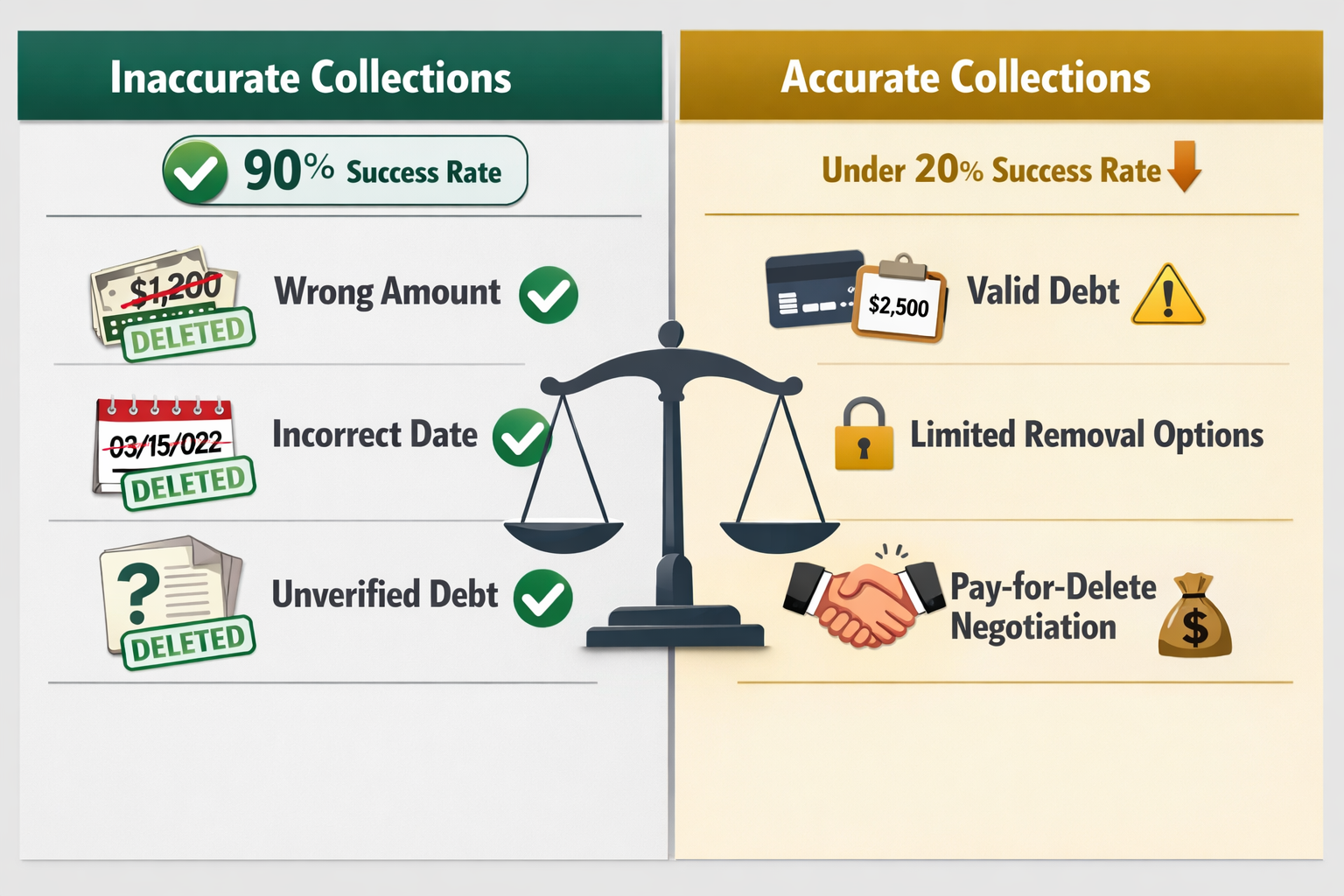
    • Collections with errors, unverifiable information, or missing documentation can be removed with success rates exceeding 90%[1]
    • Accurate collections rarely delete without leverage, with removal rates under 20%[1]
    • The Fair Credit Reporting Act requires credit bureaus to investigate disputes within 30 days[1]
    • Pay-for-delete agreements depend entirely on creditor discretion and require written confirmation[2]
    • Collections automatically fall off credit reports seven years from the original delinquency date[1]
    • DIY dispute methods follow the same legal process as credit repair companies
    • Time-barred debts near the seven-year mark have higher removal chances due to missing verification documents

    Quick Answer

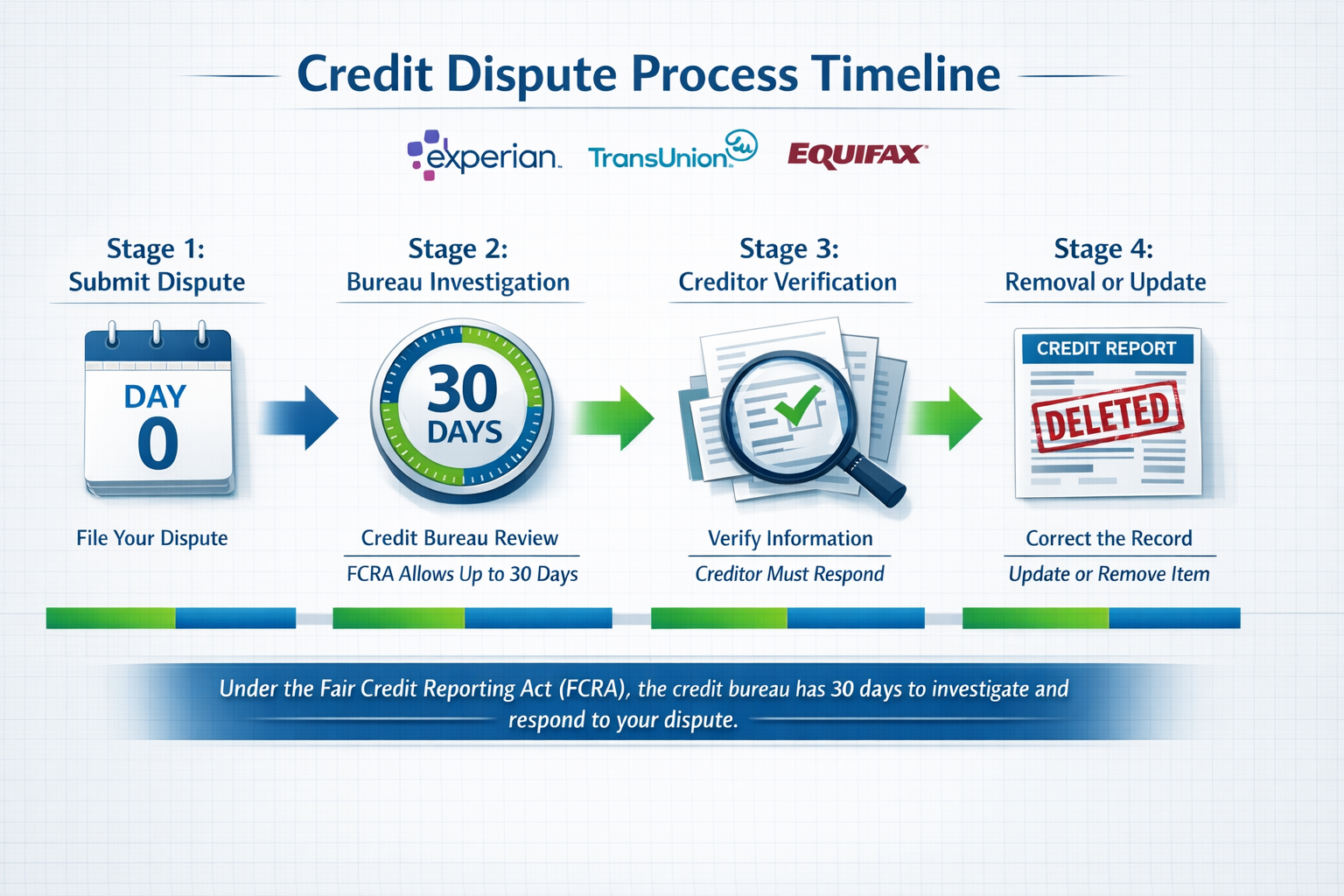
    Landscape format (1536x1024) detailed infographic showing the credit dispute process timeline with four connected stages: Stage 1 'Submit Di

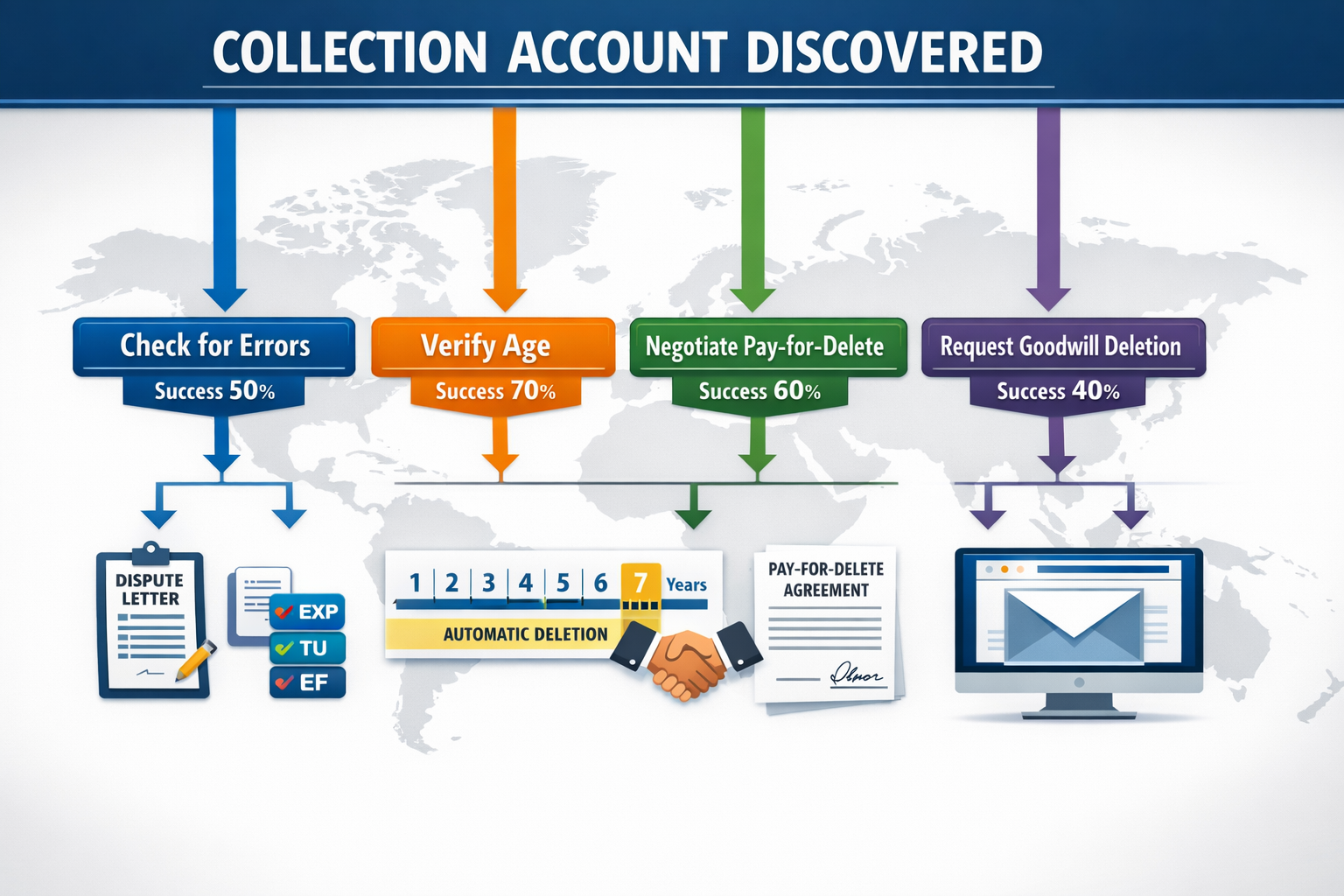
    Credit repair companies can remove collections, but only under specific conditions. If a collection account contains inaccuracies (wrong amount, incorrect dates, unverifiable ownership), credit repair firms can dispute it and often succeed in getting it deleted. However, accurate collections that creditors can verify cannot be legally forced off your report. Success depends on finding errors, negotiating pay-for-delete agreements, or waiting for the seven-year reporting period to expire.

    How Do Credit Repair Companies Actually Remove Collections?

    Credit repair companies remove collections by identifying weaknesses in how the debt is reported and documented, then challenging those entries through formal disputes. They cannot use secret loopholes or special connections—they follow the same legal process available to anyone under the Fair Credit Reporting Act (FCRA).[1]

    The removal process works through three main strategies:

    Disputing inaccuracies: Credit repair firms scrutinize collection entries for errors like wrong amounts, incorrect dates, mismatched account numbers, or ownership disputes. When they find discrepancies, they file formal disputes with credit bureaus, which must investigate within 30 days.[1]

    Exploiting verification failures: Under FCRA rules, collection agencies must verify the debt’s validity when challenged. If they cannot provide adequate documentation within the investigation window (which can extend to 45 days with additional documents), the bureau must remove the entry—even if the debt is actually valid.[1]

    Negotiating voluntary deletions: Credit repair companies contact creditors and collection agencies to negotiate pay-for-delete agreements or goodwill deletions. These arrangements are voluntary; creditors aren’t legally required to accept them.[1]

    A documented case from January 2026 shows how this works in practice. Maurice used credit repair strategies to remove four collections and charge-offs within two dispute rounds, with his TransUnion score jumping 59 points.[3] The key was identifying data inconsistencies tied to old addresses and name variations that weakened the connection between him and the accounts.

    Common mistake: Many people assume credit repair companies have special authority to delete accurate information. They don’t. The Federal Trade Commission explicitly states: “No one promising to repair your credit can legally remove information if it’s both accurate and current.”[7]

    Can Credit Repair Companies Remove Accurate Collections?

    Credit repair companies cannot legally force removal of accurate collection accounts that creditors can verify. The FCRA requires credit bureaus to maintain valid information for up to seven years from the original delinquency date, and no company can override this federal law.[1][7]

    However, “accurate” doesn’t always mean “permanent.” Here’s what can still happen:

    Pay-for-delete negotiations: Some creditors voluntarily agree to remove collection entries after receiving payment, even though the debt is accurate. Success depends entirely on the creditor’s internal policies—there’s no legal requirement for them to delete.[1] Written agreements are essential because verbal promises provide no legal protection.[2]

    Goodwill deletions: For paid collections, credit repair companies may send goodwill letters requesting removal as a courtesy. This works best when you have a documented hardship (medical emergency, job loss) and a history of otherwise responsible credit use.

    Aging out naturally: Collections automatically delete seven years from the original delinquency date. Credit repair companies can’t speed this up, but they can ensure bureaus comply with the timeline.[1]

    Industry estimates suggest accurate collection entries have under 20% removal rates through credit repair efforts.[1] The odds improve significantly if:

    • The debt is close to the seven-year mark (creditors often lack documentation for old debts)
    • You can demonstrate the collection resulted from identity theft or fraud
    • The original creditor has gone out of business or sold the debt multiple times
    • You have leverage (like offering full payment in exchange for deletion)

    Choose this approach if: You’ve verified the collection is accurate but want to explore every legal option before accepting it will remain on your report for the full seven years.

    What’s the Success Rate for Removing Inaccurate Collections?

    When collections contain errors or unverifiable information, success rates for complete removal exceed 90%.[1] This high success rate reflects how the FCRA investigation process works—if creditors can’t prove the debt’s validity within 30 days, bureaus must delete it.

    Common inaccuracies that lead to successful removals include:

    • Wrong account balances: The collection shows $500 but you only owed $350
    • Incorrect dates: The delinquency date is wrong, affecting the seven-year reporting period
    • Duplicate entries: The same debt appears multiple times from different collectors
    • Identity errors: Wrong name spelling, address, or Social Security number digits
    • Ownership disputes: The collection agency can’t prove they legally own the debt
    • Statute of limitations violations: Reporting debt beyond the seven-year limit

    The verification process creates natural removal opportunities. Collection agencies often purchase debt portfolios with incomplete documentation. When challenged, they may lack:

    • Original creditor agreements
    • Payment history records
    • Proof of debt ownership transfer
    • Your signature on any agreement
    • Verification of the exact amount owed

    Real-world example: Collections tied to old data, previous addresses, or name variations create removal opportunities by weakening the connection between you and the account.[3] If you moved several times or changed your name, the collection agency may struggle to verify the debt belongs to you specifically.

    Edge case: Sometimes collections are technically accurate but reported incorrectly. For instance, the debt is valid but the creditor lists the wrong account type (medical vs. credit card) or reports it to only two bureaus instead of three. These reporting inconsistencies give you grounds for dispute.

    The 30-day investigation window (up to 45 days with additional documents) typically requires 1-3 dispute rounds, stretching the total process to 2-6 months.[1] Credit repair companies often file multiple rounds because creditors sometimes provide minimal verification the first time, then fail to respond to subsequent challenges.

    How Long Does the Collection Removal Process Take?

    Landscape format (1536x1024) comparison chart showing two scenarios side-by-side: Left panel titled 'Inaccurate Collections' with green chec

    The FCRA requires credit bureaus to complete investigations within 30 days of receiving a dispute, with extensions up to 45 days if you submit additional documentation during the investigation.[1] However, the complete removal process typically takes 2-6 months because credit repair companies run multiple dispute rounds.[1]

    Here’s the realistic timeline:

    Phase Duration What Happens
    Initial dispute submission Week 1 Credit repair company files disputes with all three bureaus
    Bureau investigation 30-45 days Bureaus contact creditors for verification
    First results Day 30-45 Bureaus report findings (deleted, verified, or updated)
    Second dispute round (if needed) 30-45 days Challenge verification quality or new inaccuracies
    Third dispute round (if needed) 30-45 days Final challenges or escalation to CFPB complaint
    Pay-for-delete negotiation 2-8 weeks Parallel process with creditors while disputes proceed

    Why multiple rounds matter: Creditors often provide minimal verification in the first round—just confirming the debt exists. A second dispute can challenge the quality of that verification, asking for specific documentation like original agreements or payment histories. If the creditor can’t provide detailed proof, the bureau must delete the entry.

    Faster results occur when:

    • The collection is clearly inaccurate (wrong person, paid debt still showing)
    • The collection agency doesn’t respond within 30 days
    • The debt is near the seven-year reporting limit and documentation is missing
    • You provide strong evidence (receipts, validation denial letters) upfront

    Slower timelines happen when:

    • The creditor has complete documentation and responds promptly
    • Multiple collection accounts need individual disputes
    • You’re negotiating pay-for-delete (creditors may take weeks to respond)
    • Bureaus request additional information, triggering the 45-day extension

    Common mistake: Expecting instant results. Even when collections are obviously wrong, the legal investigation process takes time. Companies promising “24-hour deletion” are either scamming you or using illegal tactics that could backfire.

    Pro tip: Time-barred debts near the seven-year reporting limit have the highest removal success rates because bureaus automatically purge valid entries upon dispute when aged debts lack adequate proof.[1] If your collection is six years old, waiting a few more months might be more effective than aggressive disputing.

    What Evidence Do You Need to Remove Collections?

    To successfully remove collections, you need proof that challenges the debt’s validity, accuracy, or legal reportability. The stronger your evidence, the higher your chances of deletion—credit bureaus and creditors must respond to documented proof, not just your word.[1][2]

    Essential documentation includes:

    For inaccurate collections:

    • Credit reports from all three bureaus showing the disputed entry
    • Receipts or bank statements proving you paid the debt
    • Correspondence showing different amounts than what’s reported
    • Identity theft reports if the debt isn’t yours
    • Documentation of name changes, address changes, or data mismatches

    For verification challenges:

    • Debt validation letters you sent to collectors
    • Responses (or lack thereof) from collection agencies
    • Proof the collector didn’t respond within the required timeframe
    • Evidence of ownership disputes (debt sold multiple times)

    For pay-for-delete negotiations:

    • Written pay-for-delete agreements before making payment[2]
    • Proof of payment (never pay without a written agreement first)
    • Follow-up correspondence confirming deletion terms
    • Documentation of any verbal promises (though these lack legal weight)

    For time-barred debts:

    • Original delinquency date documentation
    • Calculation showing the debt exceeds seven years
    • State statute of limitations information (for legal action, not reporting)

    Real scenario: When disputing a medical collection, you’d want the original hospital bill, insurance explanation of benefits, payment receipts, and correspondence with the collection agency. If the amounts don’t match or the collection agency can’t provide the original creditor agreement, you have grounds for removal.

    What makes evidence compelling:

    • Official documents (not just your handwritten notes)
    • Dated correspondence showing timelines
    • Inconsistencies between what different parties claim
    • Proof of procedural violations (like failing to send required notices)

    Choose this approach if: You have documentation that contradicts what’s on your credit report. Without evidence, disputes become “he said, she said” situations where bureaus typically side with creditors.

    Edge case: Sometimes the best evidence is the absence of evidence. If you request debt validation and the collector never responds, that non-response becomes your proof. Save all certified mail receipts and track response deadlines carefully.

    Should You Hire a Credit Repair Company or DIY?

    You can legally do everything a credit repair company does yourself—the FCRA gives individuals the same dispute rights as any company. The decision to hire help or go DIY depends on your time, confidence navigating credit laws, and the complexity of your situation.

    Choose DIY if:

    • You have 1-2 collection accounts to dispute
    • The errors are obvious (wrong amount, already paid, not your debt)
    • You’re comfortable writing formal dispute letters
    • You can track multiple 30-day deadlines and follow up consistently
    • You want to save the $50-150 monthly fees credit repair companies charge[4]

    Choose professional help if:

    • You have multiple collections across different creditors
    • You’re unsure what qualifies as a valid dispute reason
    • You’ve tried DIY disputes without success
    • You’re preparing for a major purchase (mortgage, car loan) and need faster results
    • You want expert negotiation for pay-for-delete agreements
    • The time investment of managing disputes yourself isn’t practical

    What credit repair companies provide:

    • Knowledge of which dispute reasons work best
    • Template letters and documentation strategies
    • Systematic tracking of all three bureaus and multiple creditors
    • Negotiation experience with collection agencies
    • Understanding of FCRA technicalities and creditor response patterns

    What they cannot do:

    • Remove accurate, verifiable information legally[7]
    • Guarantee specific results or timelines
    • Create new credit identities or use illegal tactics
    • Improve your credit faster than you could yourself with the same strategies

    Cost comparison: DIY costs only postage and certified mail fees (roughly $10-30 total). Credit repair companies charge $50-150 monthly, with most cases taking 3-6 months ($150-900 total).[4] You’re paying for expertise and time savings, not access to special powers.

    Common mistake: Hiring companies that promise guaranteed deletion of accurate debts or specific score increases. Legitimate firms explain what’s possible under FCRA rules and set realistic expectations.

    Middle ground option: Use credit repair software or one-time consultation services that teach you the process but let you execute it yourself. This combines expert knowledge with DIY cost savings.

    What Happens After Collections Are Removed?

    When collections are successfully removed from your credit report, the impact on your credit score is typically immediate but varies based on your overall credit profile. The deletion doesn’t erase the original debt’s legal status—you may still owe the money even if it’s no longer reported.

    Immediate effects:

    • Score increase: Most people see 20-100 point improvements, depending on how many collections are removed and what other credit factors exist
    • Report updates: Changes appear within 30 days of bureau confirmation, sometimes within days for online disputes
    • Improved credit mix: Removing negative items improves your payment history percentage (35% of FICO scores)

    What removal doesn’t change:

    • The legal obligation to pay the debt (unless you negotiated settlement or discharge)
    • Other negative items still on your report
    • Your actual creditworthiness for future borrowing
    • The original creditor’s internal records

    Important distinction: Removal from your credit report differs from debt forgiveness. If you disputed an accurate collection and won because the creditor couldn’t verify it, you may still legally owe the debt. Creditors can still sue for payment within your state’s statute of limitations (typically 3-6 years for most debts, varying by state).

    Best practices after removal:

    1. Download updated reports from all three bureaus to confirm deletion
    2. Keep documentation of the removal in case it reappears (errors sometimes resurface)
    3. Monitor your credit monthly to catch any re-insertion attempts
    4. Address the underlying issue that led to collections (budget problems, medical debt, etc.)
    5. Build positive credit to replace the negative history with good payment patterns

    Real-world scenario: After removing a $500 utility collection, your score jumps 45 points, helping you qualify for a car loan. However, the utility company still has the right to pursue the $500 debt through collections or legal action unless you’ve paid it or reached a settlement.

    Edge case: Sometimes creditors re-insert deleted collections after several months, claiming they’ve now obtained proper verification. If this happens, you can dispute again and file a complaint with the Consumer Financial Protection Bureau for violating FCRA re-insertion rules.

    Choose this approach if: You want to maximize the credit score benefit while understanding your legal obligations remain separate from credit reporting.

    What Are the Risks of Using Credit Repair Companies?

    Landscape format (1536x1024) step-by-step visual guide showing credit repair strategy flowchart with decision tree format. Top shows 'Collec

    While legitimate credit repair companies provide legal services, the industry includes scams and questionable practices that can waste your money or damage your credit further. Understanding the risks helps you avoid predatory companies and make informed decisions.

    Common risks and red flags:

    Financial risks:

    • Upfront fees: Federal law prohibits charging before services are performed, but some companies find workarounds[7]
    • Monthly charges without results: Paying $100/month for six months with no deletions
    • Unnecessary services: Disputing accurate information you could simply wait to age off
    • Hidden costs: Setup fees, monthly monitoring charges, or cancellation penalties

    Legal and credit risks:

    • Illegal tactics: Some companies advise creating new credit identities (illegal) or filing false disputes
    • Worsened credit: Frivolous disputes can trigger creditor responses that add negative information
    • Legal liability: If a company uses illegal methods, you could face consequences
    • Debt collector attention: Disputes sometimes prompt dormant collectors to restart collection efforts

    Scam warning signs:

    • Guaranteeing specific score increases or deletion of accurate information
    • Pressuring you to sign immediately without reviewing contracts
    • Advising you not to contact credit bureaus directly
    • Suggesting you dispute everything regardless of accuracy
    • Requiring payment before providing any services
    • Promising to create a “new credit identity” using CPNs (Credit Privacy Numbers)

    Legitimate company characteristics:

    • Explains your legal rights under FCRA before selling services
    • Provides written contracts detailing services and costs
    • Charges only after performing work
    • Sets realistic expectations about outcomes
    • Encourages you to check their reputation with state attorneys general
    • Offers money-back guarantees if they don’t deliver results

    Real example: The FTC regularly shuts down credit repair scams that charge thousands of dollars upfront, then disappear or provide no actual service. In 2025-2026, enforcement actions targeted companies making false promises about removing accurate bankruptcies and foreclosures.

    Risk mitigation strategies:

    1. Research companies through Better Business Bureau and state consumer protection offices
    2. Read contracts completely before signing
    3. Verify the company is bonded and registered in your state (if required)
    4. Start with a single month to evaluate results before committing long-term
    5. Keep copies of all communications and documentation

    Choose DIY if: You’re uncomfortable with the risk-to-benefit ratio of hiring help, especially if your collections are recent and clearly accurate.

    How Do Pay-for-Delete Agreements Work?

    Pay-for-delete agreements are arrangements where collection agencies or creditors agree to remove negative entries from your credit report in exchange for payment. These deals are entirely voluntary—creditors have no legal obligation to delete accurate information after receiving payment.[1]

    The basic process:

    1. Contact the creditor or collector (not the credit bureau) to propose pay-for-delete
    2. Negotiate terms including the exact payment amount and deletion confirmation
    3. Get written agreement before sending any money[2]
    4. Make payment according to the agreed terms
    5. Verify deletion on all three credit reports within 30-45 days
    6. Follow up if deletion doesn’t occur as agreed

    What to include in written agreements:

    • Specific account number and creditor name
    • Exact payment amount and payment method
    • Explicit statement that the creditor will request deletion from all three bureaus
    • Timeline for deletion (typically 30 days after payment)
    • Confirmation that payment settles the account in full
    • Signatures from both parties

    Success factors:

    • Timing: Creditors are most willing to negotiate when debts are old or they’ve purchased the debt for pennies on the dollar
    • Leverage: Offering full payment (not settlement) increases acceptance odds
    • Creditor policies: Some companies have blanket policies against pay-for-delete; others routinely accept
    • Negotiation approach: Professional, written requests work better than aggressive demands

    Common mistake: Paying first, then asking for deletion. Once creditors have your money, they have zero incentive to delete. Always get written confirmation before payment.[2]

    Alternative approach—goodwill deletion: For debts you’ve already paid, send goodwill letters explaining the circumstances that led to the collection (medical emergency, job loss, etc.) and requesting deletion as a courtesy. This works best when:

    • You have an otherwise clean credit history
    • The collection was a one-time hardship situation
    • You’ve been a customer of the original creditor for years
    • You can demonstrate the collection is preventing a significant life goal (buying a home, etc.)

    Legal reality: The credit reporting agencies’ own guidelines suggest creditors should report accurate information, making pay-for-delete ethically questionable in their view. However, it’s not illegal, and many creditors participate because it helps them collect on debts they might otherwise never recover.

    Edge case: Some creditors will agree to update the status to “paid” or “settled” but refuse deletion. While not as beneficial as removal, changing the status to paid still improves your credit profile.

    Frequently Asked Questions

    Can credit repair companies remove collections that are accurate? No, credit repair companies cannot legally force removal of accurate, verifiable collections. However, they can negotiate voluntary pay-for-delete agreements or identify technical reporting errors even in otherwise accurate accounts.[1][7]

    How much does it cost to have collections removed? DIY removal costs only postage ($10-30 total). Credit repair companies charge $50-150 monthly, with most cases taking 3-6 months ($150-900 total). Pay-for-delete agreements cost whatever payment amount you negotiate with the creditor.[4]

    Will paying off collections remove them from my credit report? No, paying a collection doesn’t automatically remove it. The account updates to “paid collection” status but remains on your report for seven years from the original delinquency date unless you negotiate pay-for-delete before paying.[1]

    How long do collections stay on your credit report? Collections remain on credit reports for seven years from the original delinquency date (the date you first became late with the original creditor, not when it went to collections). This timeline cannot be legally extended.[1]

    Can I dispute a collection that’s mine but has wrong information? Yes, you can and should dispute any inaccurate information, even if the underlying debt is yours. Wrong amounts, dates, or account details violate FCRA accuracy requirements and provide grounds for removal.[1]

    What happens if a collection agency can’t verify the debt? If the collection agency cannot provide adequate verification within 30 days of a dispute, the credit bureau must remove the collection from your report, even if the debt is actually valid.[1]

    Do credit repair companies have special access to remove collections? No, credit repair companies use the same FCRA dispute process available to anyone. They have no special authority or connections—their value comes from expertise and systematic execution, not secret access.[7]

    Can collections be removed before seven years? Yes, through successful disputes of inaccuracies, verification failures, pay-for-delete negotiations, or goodwill deletions. However, accurate collections that creditors can verify typically remain the full seven years unless voluntarily removed.[1]

    Should I pay a collection that’s about to fall off my credit report? Generally no, unless the creditor might sue you. If a collection is 6+ years old and approaching automatic deletion, payment updates it to “paid” status, which can actually refresh it and keep it visible longer. Consult a consumer attorney for your specific situation.

    Can credit repair companies guarantee results? No legitimate company can guarantee specific results because removal depends on factors outside their control (creditor verification, debt accuracy, bureau decisions). Companies promising guaranteed deletions of accurate information are using illegal tactics or scamming you.[7]

    What’s the difference between credit repair and debt settlement? Credit repair focuses on removing inaccurate or unverifiable items from credit reports. Debt settlement negotiates reduced payment amounts to resolve debts, which may still show as “settled for less than owed” on your credit report.

    Can I remove collections myself without hiring a company? Yes, you have the same legal rights as any credit repair company under the FCRA. You can file disputes, request debt validation, and negotiate pay-for-delete agreements yourself, saving the monthly fees companies charge.[1]

    Conclusion

    The answer to “can credit repair companies remove collections” is nuanced: they can remove inaccurate or unverifiable collections with high success rates (over 90%), but they cannot legally force deletion of accurate, verifiable accounts.[1] Their effectiveness depends entirely on finding errors, exploiting verification failures, or negotiating voluntary deletions with creditors.

    Credit repair companies offer legitimate services for people dealing with multiple collections, complex credit situations, or those who lack time to manage the dispute process themselves. However, they follow the same legal procedures available to anyone under the Fair Credit Reporting Act—there are no secret loopholes or special connections.

    Your next steps:

    1. Pull your credit reports from all three bureaus (free at AnnualCreditReport.com) and identify all collection accounts
    2. Document inaccuracies like wrong amounts, dates, or accounts that aren’t yours
    3. Decide DIY vs. professional help based on your situation’s complexity and your available time
    4. Start with verification requests to collection agencies, requiring them to prove the debt’s validity
    5. Dispute clear errors with credit bureaus using specific facts and supporting documentation
    6. Negotiate pay-for-delete for accurate collections you’re willing to pay, getting written agreements first[2]
    7. Monitor results and file follow-up disputes if initial attempts don’t succeed
    8. Build positive credit while addressing collections, since new good payment history strengthens your overall profile

    Remember that legitimate credit repair—whether DIY or professional—takes time. The FCRA’s 30-day investigation window means results typically appear over 2-6 months, not overnight. Be skeptical of any company promising instant deletion of accurate information or guaranteed score increases.

    Whether you choose to hire help or handle disputes yourself, understanding your rights under federal credit laws empowers you to make informed decisions and avoid scams. Collections can be removed, but success requires either genuine inaccuracies or creditor cooperation—not magic or illegal tactics.


    References

    [1] Can Credit Repair Companies Really Remove Collections – https://www.thecreditpeople.com/credit-repair/can-credit-repair-companies-really-remove-collections

    [2] How To Legally Remove Collections From Your Credit Report After Paying Off Debt – https://rapalegal.com/resources/blog/how-to-legally-remove-collections-from-your-credit-report-after-paying-off-debt/

    [3] Watch – https://www.youtube.com/watch?v=3wyS_oDGGTE

    [4] Best Credit Repair Companies – https://money.com/best-credit-repair-companies/

    [7] Fixing Your Credit Faqs – https://consumer.ftc.gov/articles/fixing-your-credit-faqs